
Interventional Services
Minimally invasive, image-guided therapeutic procedures performed by consultant musculoskeletal radiologists.
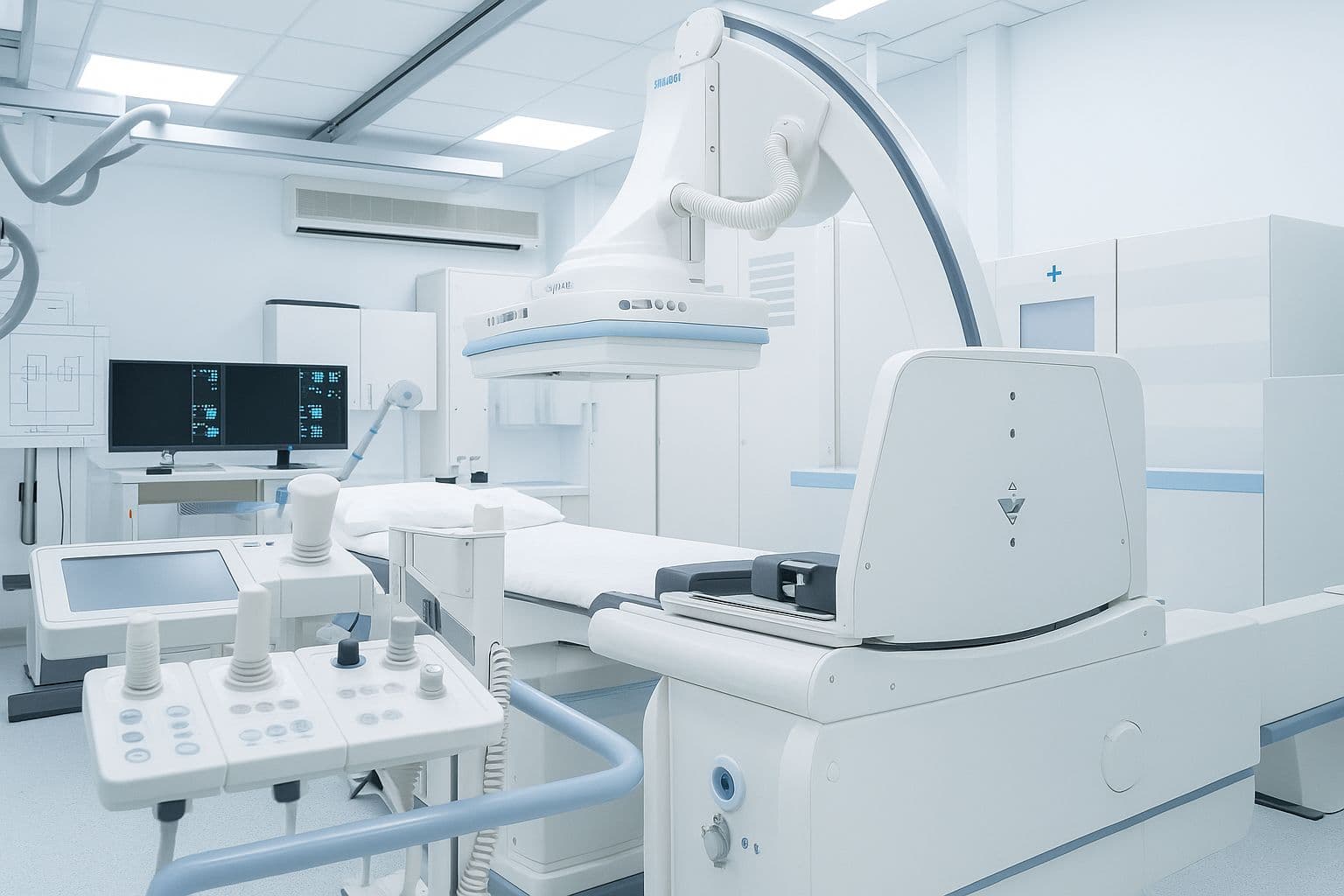
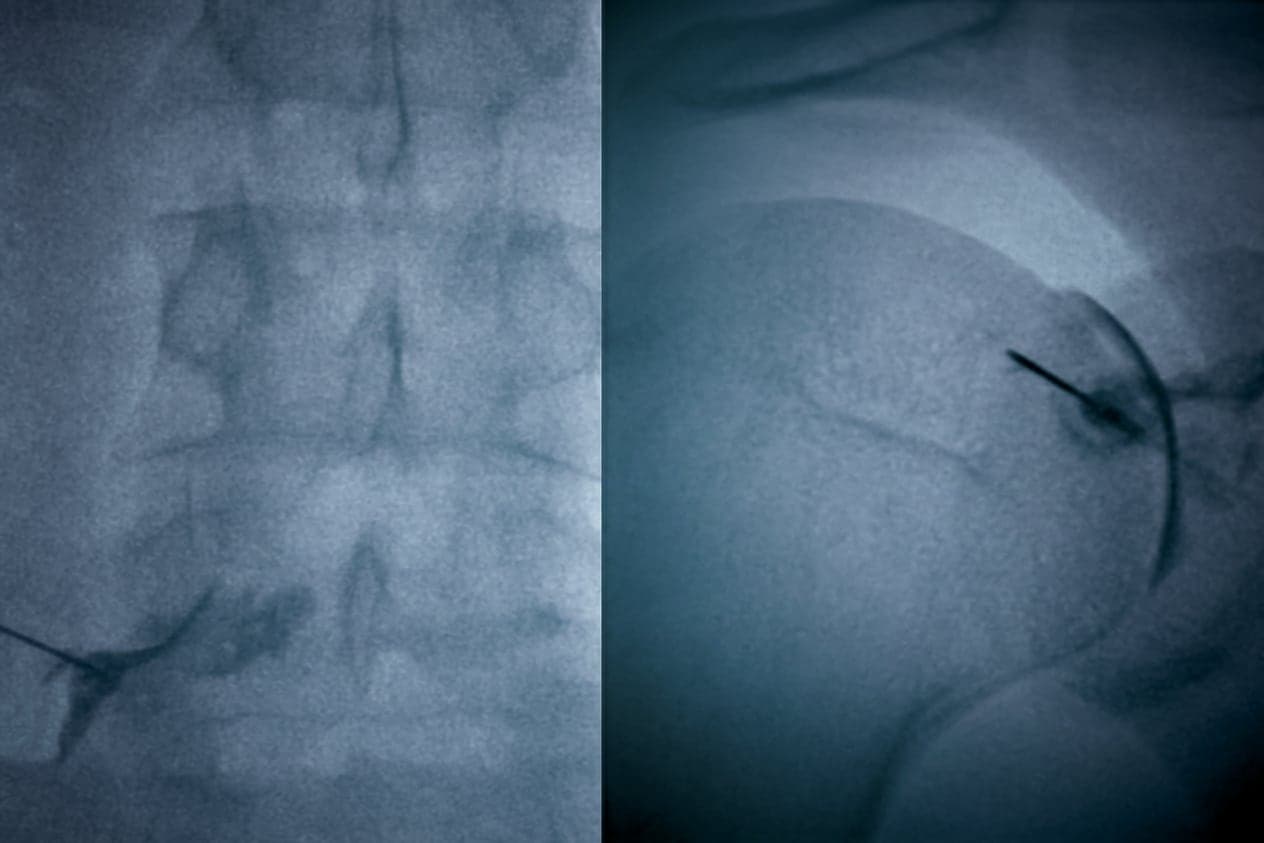
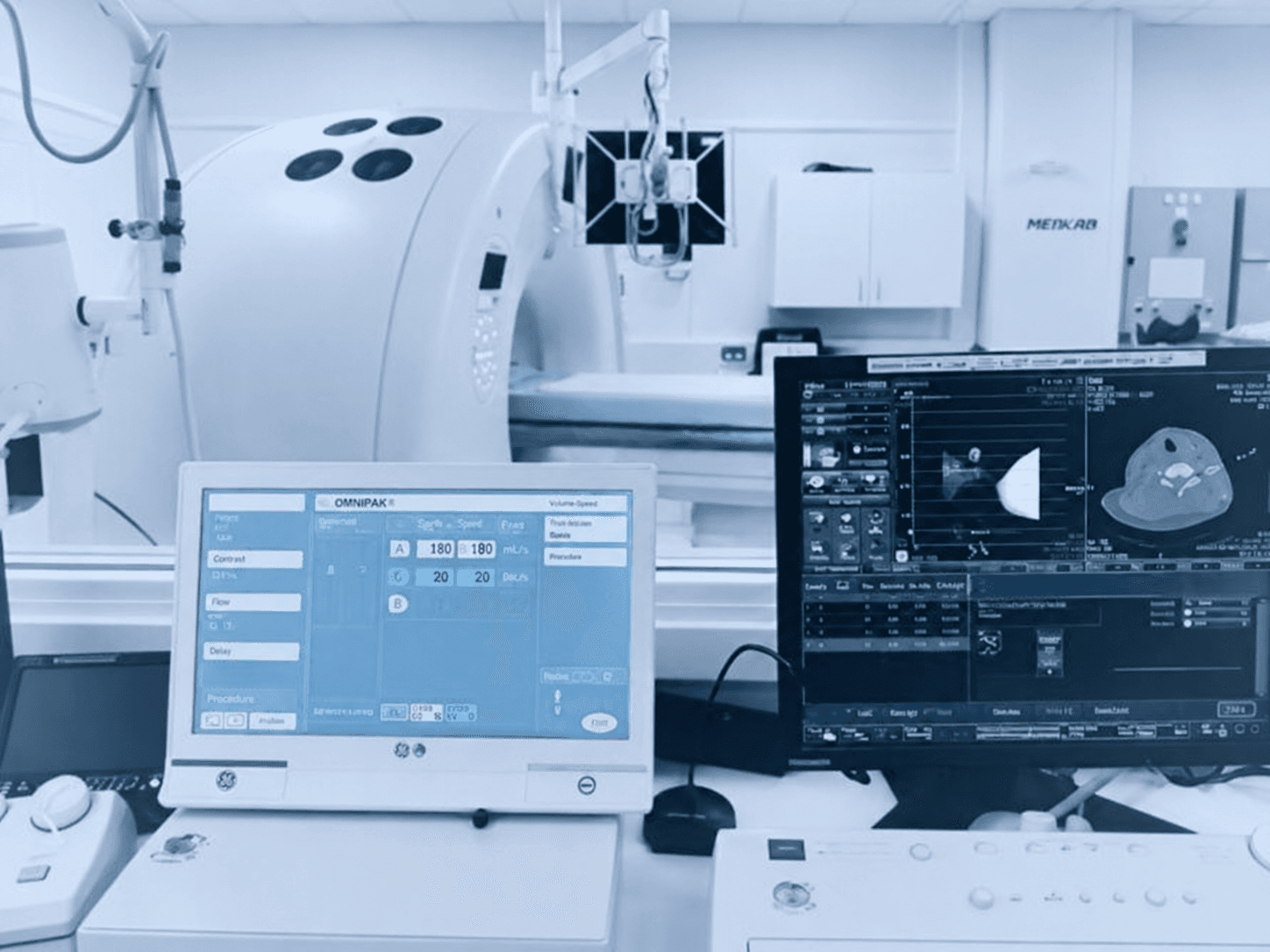
Image Guided Steroid Injections
An injection of local anaesthetic and steroid into the joints or soft tissues of your body. The local anaesthetic provides rapid pain relief. The steroid acts as a localised anti-inflammatory, reducing pain and swelling longer than the anaesthetic lasts.
Patients receive these injections for two reasons: as diagnostic tests confirming pain sources from specific joints or structures, guiding further investigations or treatment; and as therapeutic measures improving pain or symptoms.
The consultant explains the procedure and answers questions. Skin is cleaned with sterile solution. Local anaesthetic numbs the area. The injection needle is guided under X-ray, ultrasound, or CT guidance. Once correctly sited, the mixture is injected, the needle removed and dressing applied.
- Facet joint injections of the spine (CT/X-ray guided)
- Nerve root blocks (CT/X-ray guided)
- Shoulder hydrodilatation (X-ray guided)
- Joint injections (X-ray guided)
- Shoulder subacromial subdeltoid bursa (ultrasound guided)
- Elbow joint injection (ultrasound guided)
- Wrist and hand joints and tendon sheath (ultrasound guided)
- Knee joint, popliteal cyst, pes anserine bursa (ultrasound guided)
- Ankle and foot joints and tendon sheath, plantar fasciitis, Morton’s neuroma (ultrasound guided)
Nerve Root Block Injection
This injection around the nerve root as it leaves the spine is performed under image guidance (X-ray or CT). Injections relieve pain and inflammation around nerves, helping arm or leg pain (sciatica) and paraesthesia (pins and needles), sometimes treating back pain.
An anti-inflammatory drug (steroid), a local anaesthetic, and a small quantity of dye confirming injection position are administered. The local anaesthetic provides immediate symptom relief. Anti-inflammatory drugs may take up to 6 weeks to work.
Patients lie prone for 10–20 minute procedures. Nursing staff monitor patients until ready to go home (approximately 30 minutes). You must not drive yourself home due to potential weak legs with lumbar nerve root blocks.
Facet Joint Injections for Back Pain
Facet joint injections treat pain from degenerative spinal changes, a common backache cause. Steroid and local anaesthetic are injected into small joints under X-ray guidance providing pain relief.
Procedures take 30 minutes. Remain in department 15–30 minutes after procedure and avoid self-driving home.
Hydrodilatation for Frozen Shoulder
Frozen shoulder (adhesive capsulitis) is an extremely painful condition where shoulders become very stiff. It often starts without apparent reason but may associate with diabetes, thyroid disease, or Dupuytren’s disease. The condition progresses through three phases: pain (freezing stage), stiffness (frozen stage), and resolution (thawing phase).
Fine needles are inserted into shoulder joints under X-ray guidance. Then 15–40 mls of mixture containing normal saline, local anaesthetic, and small steroid amounts are injected. The fluid distends and stretches the contracted capsule, opening or freeing the joint and improving movement range.
Most patients notice immediate pain reduction and increased movement range following procedures. Shoulder hydrodilatation is safe and minimally invasive.
Barbotage Therapy
Image-guided barbotage breaks up tendon calcification. The commonest location is shoulder tendons (calcific tendinosis). Under local anaesthetic and ultrasound guidance, needles break up and remove calcium. Steroid is then injected reducing inflammation.
Procedures take up to 30 minutes. Remain in department 15–30 minutes after procedure and avoid self-driving home.
Brisement Therapy
Image-guided brisement therapy breaks up scar tissue, commonly performed for painful Achilles tendon inflammation. High-volume local anaesthetic and saline injections are administered under ultrasound guidance.
Procedures take 15–30 minutes. Remain in department 15–30 minutes after procedure and avoid self-driving home.
Need a referral?
Clinicians can submit a referral online. Patients can book an appointment or enquire about imaging directly.